A First Festival Visit: Leave Space Between Events
A first festival visit is easier to enjoy when you choose a few priorities, leave gaps between events and make room for the gathering itself.
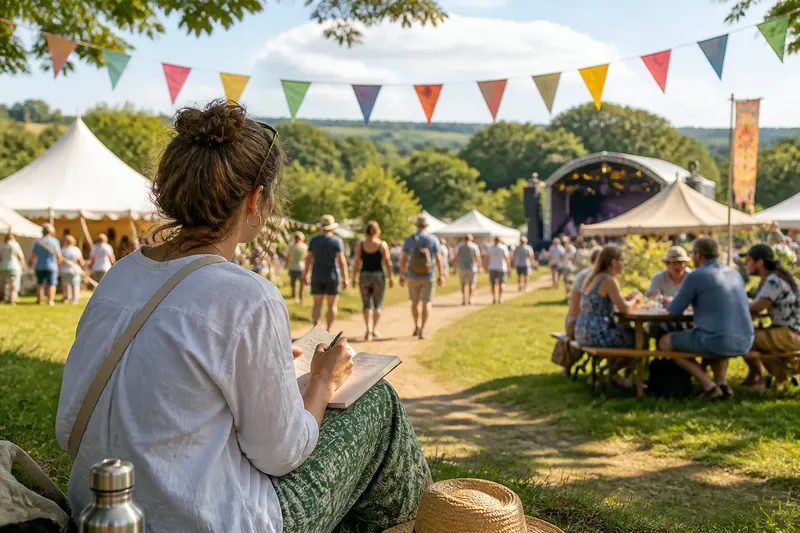
The common mistake on a first festival visit is treating the programme like a list to complete. You may arrive with every hour assigned and leave remembering the rush between stages more clearly than the festival itself. A better plan starts with a few things you genuinely want to see, then leaves room for whatever happens around them.
How many events should you choose?
Begin with the programme and mark the events you would be disappointed to miss. Choose a small handful across the visit, not a full day’s worth. A favourite musician, a procession and a workshop may each matter for different reasons; the point is to make choices before the noise and bustle make every option seem urgent.
Then look at where those events take place and how they sit alongside one another. A festival map can reveal that two appealing performances are on opposite sides of a site, or that a food demonstration is near a quieter green. Keep the locations in mind, but resist turning them into a precise route: moving between places can be part of the day, and the crowd may set its own pace.
Which plan fits your kind of visit?
Are you travelling with children or someone who tires easily?
Choose one shared priority for the day, then leave generous breathing room around it. A familiar snack, a place to sit and the option to head back early can matter as much as another scheduled event; agree in advance that changing plans is allowed.
Are you going mainly for one performance?
Anchor the visit around that event and keep the surrounding hours open. Arriving early enough to settle in can make the wait feel like part of the occasion, while an unhurried exit leaves space to talk, eat or listen to what is happening nearby.
Are you curious but unsure what you like?
Pick one event that sounds appealing and treat the rest as discovery time. A craft tent, community dance or food stall can offer a useful introduction without requiring you to know the programme in advance.
Are you visiting with friends who want different things?
Agree on one meeting place and one event you will share, then allow some time apart. People can follow their own interests without making the whole group negotiate every choice, provided the meeting point is easy to recognise and everyone knows when to return.
How much unstructured time should you leave?
Leave a clear gap between planned events rather than scheduling one as soon as another ends. That interval can absorb a slow walk, a queue, a conversation with a stallholder or the simple need to sit down. If nothing catches your eye, it is still useful time: you can watch the site change as people arrive, gather and move between spaces.
Say you have chosen a morning storytelling session and an afternoon folk performance. Instead of filling the middle with another booked activity, you leave it open; you might find a shaded bench near the community tent and hear a group rehearsing, or you might simply eat lunch without watching the clock. Either result gives the day a different texture from a sequence of appointments.
What should you notice beyond the programme?
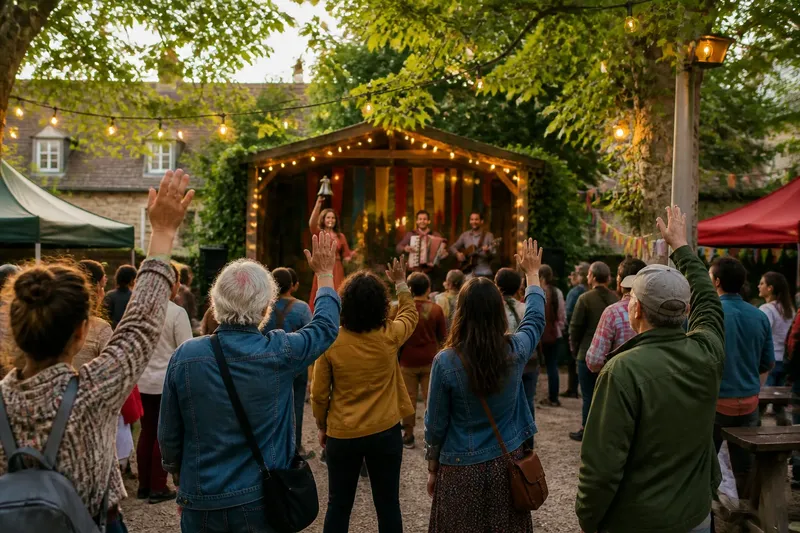
Pay attention to how people use the gathering places. A shared table may become a meeting point; a small patch of grass may fill with families between events; volunteers may be quietly directing newcomers towards water or accessible routes. These details show how the festival works as a place to spend time, not only as a set of performances.
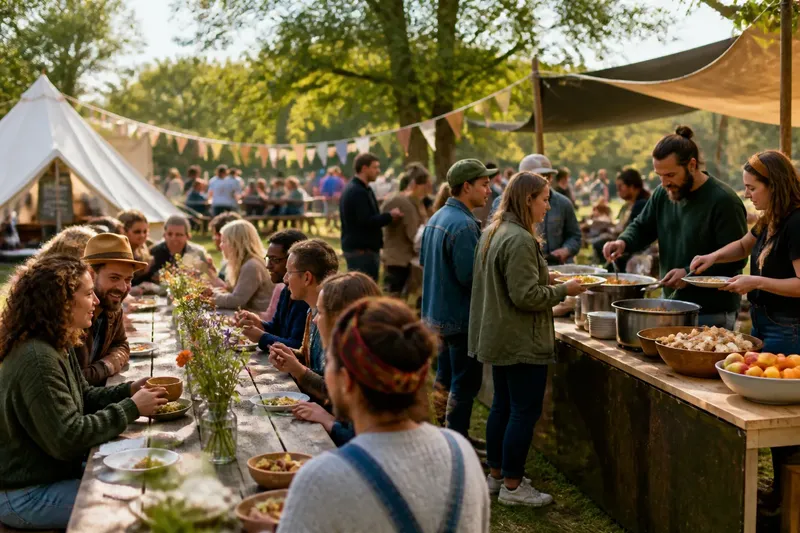
Food can be part of that wider scene. Rather than choosing a meal only as a pause between acts, notice whether the festival has communal seating, food brought from home, or stalls where people gather to chat. You need not join every custom: observing how the space is used can be enough to help you feel oriented.
What should you decide before you arrive?
Make a short note on your phone or a folded paper programme with the essentials:
- Mark the few events you most want to attend.
- Check the site map for locations and possible walking time.
- Choose a recognisable meeting point if you are with others.
- Note where seating, toilets and water are shown, if the organiser provides that information.
- Leave at least one open stretch in the day rather than assigning every gap.
- Agree which plans are flexible and what would make you leave early.
For access arrangements, age guidance, entry conditions or permitted items, use the festival’s current information and follow its instructions; details vary by event.
How can you keep the day from becoming a checklist?
Use your chosen events as landmarks, not deadlines. Before setting off for the next one, ask whether you are ready to move or whether the current place still holds your attention. A little flexibility helps you respond to weather, tiredness and unexpected conversations without treating any change as a failure.
A first festival visit does not need to reveal everything the gathering has to offer. Choose a few priorities, leave space between them, and let one unplanned moment shape the day. That balance is the point of a first festival visit: you have enough of a plan to feel at ease, and enough open time to notice what could not have been scheduled.