Before the Souvenir Stall: Festival Keepsakes Through Time
Festival keepsakes preserve the meaning of a shared occasion through use, wear and retelling, helping you distinguish personal memory from generic merchandise.
The common mistake with festival keepsakes is to treat anything bought or carried home as a memory of the occasion. A printed mug or logoed tote may be useful, but usefulness alone does not connect it to a particular gathering; the cost is a shelf of objects that could have come from anywhere. Festival keepsakes acquire character through their ties to a place, a moment and the people who handled them.
Consider how that distinction might unfold in one invented situation. Say Mara is helping prepare a small neighbourhood lantern festival beside a canal. She wants to leave with something that can recall the evening, but she does not want to add another generic souvenir to her cupboard.
What could carry the festival’s identity?
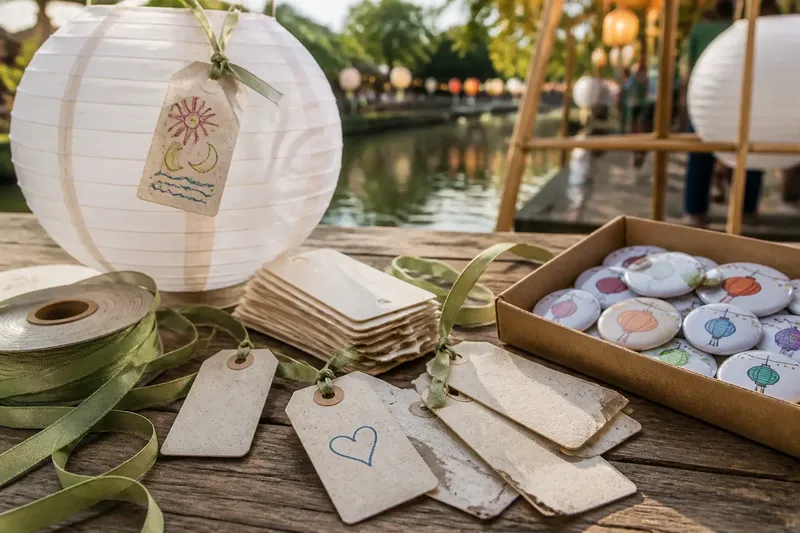
At the planning table, Mara finds three possible objects: a stack of blank paper tags, a bundle of ribbon left from last year’s lanterns and a box of new badges printed with the festival name. Each could travel home in a pocket. Only some have a clear relationship to the people and work that make this particular gathering recognisable.
The badges identify the event, but they say little about what happens there. The ribbon has already been part of the lantern-making, while the tags could hold brief notes from participants. Mara does not need to declare one object meaningful and the others worthless. She needs to ask what each object records: a name, a shared action, a particular place, or simply a purchase.
That question helps separate a keepsake from merchandise without turning the distinction into a rule about price or craftsmanship. A bought object can become a keepsake if it is connected to a specific encounter; a handmade object can remain an ornament if its story never extends beyond its appearance.
How does making leave a trace?
As volunteers prepare the lanterns, Mara notices that the ribbon is not pristine. One length is pale where it was folded around a frame, and another has a small knot from being tied and untied. These marks are not defects to hide. They show that the material passed through someone’s hands and belonged to a process the festival repeats.
She cuts the leftover ribbon into short lengths for tying tags to the lantern frames. On each tag, visitors may write a word about the evening or leave it blank. The action is modest, but it gives the object a role in the event before it becomes something to keep. A tag attached to a lantern is not merely decorated; it has shared the night’s work and weather.
For a keepsake to hold identity, its making need not be elaborate. A simple object can gather meaning through the choices around it: who prepared it, where it was used, and whether people had a reason to handle it together. Conversely, labour alone does not make an object significant. A carefully crafted item with no connection to the gathering may still feel like stock from a stall.
What changes when people handle it?
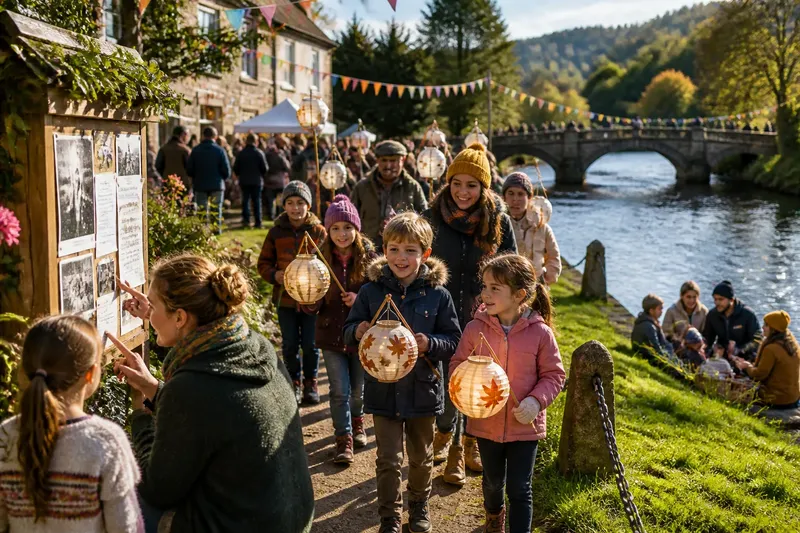
During the festival, children tie tags to the lantern frames while adults steady the paper and pass along the ribbon. Some visitors write a word; others draw a small mark or leave the paper untouched. Mara sees the objects move between different hands, and the making becomes part of the occasion rather than a separate craft display.
The tags also retain differences that a standard batch of souvenirs would smooth away. One bears a crooked drawing; another has a faint damp edge after a misty spell by the canal. Those details do not tell a complete story on their own, but they make it easier for someone present to recall the conditions and company of that evening.
Imagine Mara later gives one unused tag to her neighbour, who had to leave early. She adds the place and the festival’s name on the back, then tells her neighbour that the children tied the others to the lantern frames. The small note supplies context that the object could not carry by itself. Without it, a blank tag might look like scrap paper; with it, the tag points towards a shared event and an act of welcome.
Which questions help decide what to keep?
Does a festival keepsake need to be handmade?
No. Handwork can reveal a connection to the occasion, but a purchased object may carry meaning through a personal encounter or a specific use. Ask whether you can say why this particular item belongs to this particular festival.
Can a ticket, tag or programme become a keepsake?
Yes, if it records something you want to remember, such as where you gathered or what you did together. A paper object’s modest appearance does not prevent it from holding a clear story.
How can a keepsake show who took part?
Look for traces of shared handling, names, marks or choices made during the occasion. These traces can suggest participation, though they should not be treated as a complete record of everyone who was there.
What if the object has no story attached?
Give it context while the memory is still clear: note the place, the people involved or the moment it recalls. If none of those details matter to you, there is no need to keep the object simply because it came from a festival.
How can the memory travel beyond the evening?
After the lanterns are taken down, Mara gathers the tags that were left behind and separates them from the ribbon that can be used again. She does not collect every scrap as an heirloom. Instead, she keeps a few tags with distinct marks and writes a short note naming the canal-side gathering and the lantern work that brought them there.
This choice gives the objects a path through time without asking each one to stand for the whole festival. The tags can be shown to someone who missed the evening, added to a local archive, or kept in the box of materials for a later gathering. Their meaning remains tied to a particular event, while their reuse leaves room for the festival to change.
For organisers, the same idea offers a thoughtful alternative to treating the souvenir stall as the only place where memory begins. An event can make room for objects that people help use, mark, exchange or carry home, while still offering ordinary merchandise to those who want it. The distinction lies in the relationship an object invites, not in whether it is sold.
As Mara looks at the saved tags, she can tell which ones recall the lantern-making and which are simply blank paper. That is the quiet test of a festival keepsake: it gives memory somewhere to land, then leaves enough detail for someone else to ask what happened there.