Why Repeated Gestures Make a Festival Feel Familiar
Repeated gestures make a festival feel familiar by giving people clear ways to join in, recognise one another and carry the gathering’s rhythm forward.
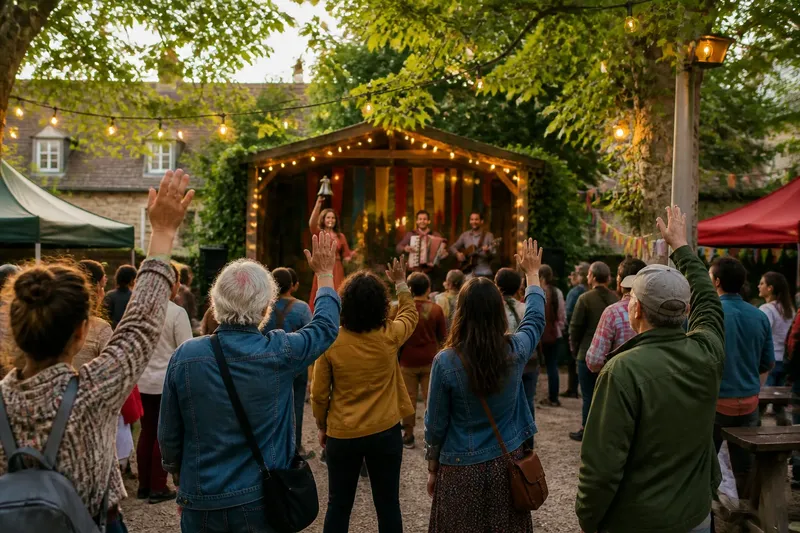
The common mistake is to treat a festival’s repeated gesture as decoration: a flourish before the music, a mark on a programme, or something only the organisers need to remember. That can leave newcomers watching from the edge and regulars unsure whether the moment still belongs to them. Repeated gestures make a festival feel familiar when they give people a simple, shared way to take part.
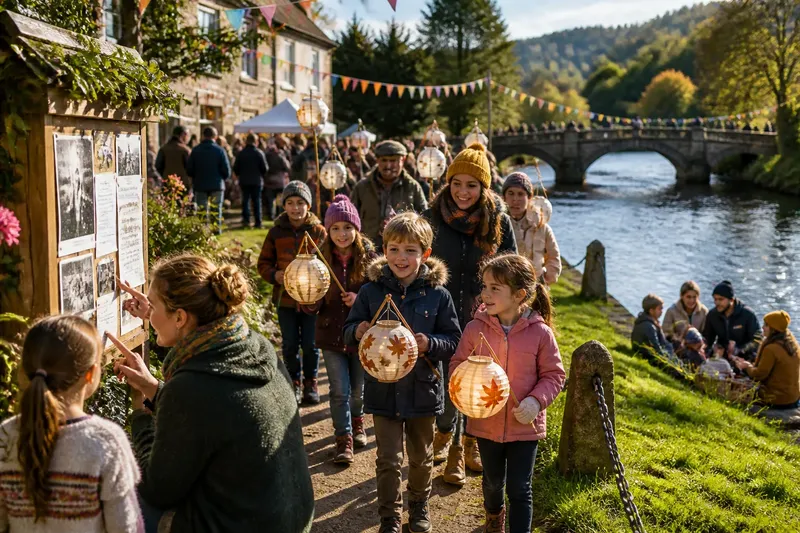
A gesture need not be grand. People might lift a lantern together, tap a wooden board before a dance, or pause as a bell sounds. What matters is that the action returns in a recognisable place in the gathering, and that people can join without needing to know a private history.
The useful question is not who first performed it. It is how the action helps people meet the event as it unfolds: where it happens, what participants do, and how they know the moment has passed. A small routine can give a varied programme a human rhythm without turning every part of the festival into a ceremony.
What makes a repeated gesture feel shared?
Repetition gives a gesture a place in people’s attention. If the same brief action appears at the start of an evening performance, visitors can begin to anticipate it; if it is also easy to understand in the moment, anticipation can become participation.
Shared does not mean compulsory. Some people may join in, others may watch, and someone arriving late may pick it up by seeing what the crowd does. A gesture that depends on everyone acting in perfect unison can make the gathering feel like an audition. One that allows different levels of involvement leaves room for a wider crowd.
Consider how legibility works. A host can signal the moment with a clear phrase, a change in the music, or a visible object, such as a handbell. The action should be understandable without a long explanation: hold up a coloured ribbon, clap once, or turn towards the stage. If visitors need to memorise a sequence, the gesture may be better suited to a workshop than to a brief communal moment.
Place matters too. A gesture performed beside a meeting point can help people orient themselves; one repeated at the end of a set may offer a gentle transition into the next part of the evening. The action gains familiarity through its relationship to the gathering, not through repetition alone.
How can organisers build a rhythm over a week?
A festival that lasts several days can let a small gesture grow familiar without announcing it as a tradition. Treat the week as a sequence of invitations. Begin with a clear cue, repeat it at a steady point in the programme, then make room for participants to shape how it feels.
Before the festival, what should be decided?
Choose one action that suits the event’s setting and audience. A quiet reading in a library courtyard calls for something different from a street procession; the gesture should fit the volume, movement and available space rather than competing with them.
Decide who gives the cue, where people will be standing, and what someone can do if they would rather not join. If the action involves a prop, use something easy to see and handle, such as a cloth banner or a small bell, rather than objects that need careful distribution. A short note for stewards can describe the cue and the intended response in plain language.
On the first day, how should the gesture be introduced?
Make the invitation brief and visible. A host might say, “When the bell rings, lift a hand if you’d like to welcome the performers,” then demonstrate once. This gives people enough information to act, without asking them to learn a backstory before they can belong.
Keep the first occurrence low-pressure. The audience can see the action, decide whether it suits them, and carry on if they miss the cue. If it takes place near a stage or marked gathering point, avoid blocking paths and leave room for people who prefer to watch from the side.
On the middle days, how can repetition stay alive?
Repeat the gesture at roughly the same kind of moment, but let the people present give it its character. A children’s group may lift both hands; older visitors may offer a small nod; a performer might respond with a wave. The shared cue holds the moment together, while the response can remain varied.
Imagine a neighbourhood arts festival where a bell signals the start of an evening courtyard performance. On the first night, the host demonstrates a single wave towards the musicians; on later nights, visitors recognise the bell and wave in their own way. The observable result to look for is not perfect synchrony, but more people understanding when the performance begins and having an easy option to acknowledge it.
On the final day, what should be carried forward?
Notice what people actually did and what seemed awkward. A steward may have found that the cue was drowned out by nearby stalls, or that people at the back could not see the host. Use those observations to adjust the timing or visibility if the gathering returns.
There is no need to declare the gesture permanent. A festival can keep it, adapt it, or let it rest. Its value lies in helping people participate now, not in making a claim about how long the action has existed.
Which practical questions help shape the gesture?
Should everyone take part?
No. Make the action an invitation, with watching or doing nothing as acceptable choices. A gesture becomes more welcoming when people can take part without being singled out.
How often should it happen?
Repeat it at a meaningful point, such as the opening of a performance or the start of a shared walk. If it interrupts the programme too often, people may stop noticing it.
What if visitors do not know the cue?
Pair the cue with a brief spoken explanation or a visible demonstration. A simple, consistent signal is easier to follow than instructions that change from one occasion to the next.
Can the gesture change over time?
Yes. Keep the part that helps people recognise the moment, and allow the manner of responding to evolve. If a change alters the action itself, explain it plainly so returning visitors and newcomers can follow together.
How can the routine welcome different people?
Participation can be physical, verbal or quiet. A person with limited mobility might raise a finger rather than stand; someone who finds noise uncomfortable may prefer a silent gesture to a call-and-response. Offer a version that does not rely on a particular movement, voice or sensory cue where the setting allows.
Language also affects who can join. A short phrase that can be heard and understood is more useful than a playful but obscure instruction. If the festival welcomes visitors who speak different languages, a gesture that can be demonstrated visually may reduce the need for explanation.
Think about the space before choosing the action. On a narrow pavement, asking a crowd to turn or gather closer could obstruct movement. In a broad lawn, people may be able to form a loose circle. Organisers should follow venue guidance and local requirements, especially where access, crowd movement or equipment is involved.
Stewards can help without policing the moment. They might model the gesture near the edges, make sure the cue is visible, and avoid asking people why they did not join. Their role is to keep the invitation clear and the surrounding space usable.
How can organisers tell whether it is working?
Look for signs of recognition, not a perfect response. People may turn towards the cue, make room for the action, or show a newcomer what to do. A few moments of shared attention can matter more than a crowd performing the same movement at once.
After each occurrence, note practical details while they are fresh: Was the cue audible? Could visitors at the back see it? Did the action interrupt a conversation or create a bottleneck? These observations can guide small changes to timing, placement or wording, without turning the festival into a survey exercise.
Ask stewards and performers what they noticed, then compare those comments with what was visible in the space. If the gesture repeatedly causes confusion, simplify it or choose another. If it seems to help people orient themselves and acknowledge one another, retain the useful part while keeping participation open.
Repeated gestures make a festival feel familiar through recognition and permission: people know when a moment is happening, and they can decide how to meet it. A bell, a wave or a shared pause need not carry a claim about a single origin. Its meaning can come from the care with which organisers make it clear, adaptable and easy to join.
When planning the next gathering, write the cue in one sentence and ask someone unfamiliar with the programme what they think they should do. If the answer is easy to give, the gesture is ready to meet the crowd; if not, simplify the invitation before adding more explanation.