Long Table or Serving Stations? Two Ways to Share Festival Food
Choose a long table or serving stations for festival food by weighing conversation, queues, access and menu needs before guests arrive.
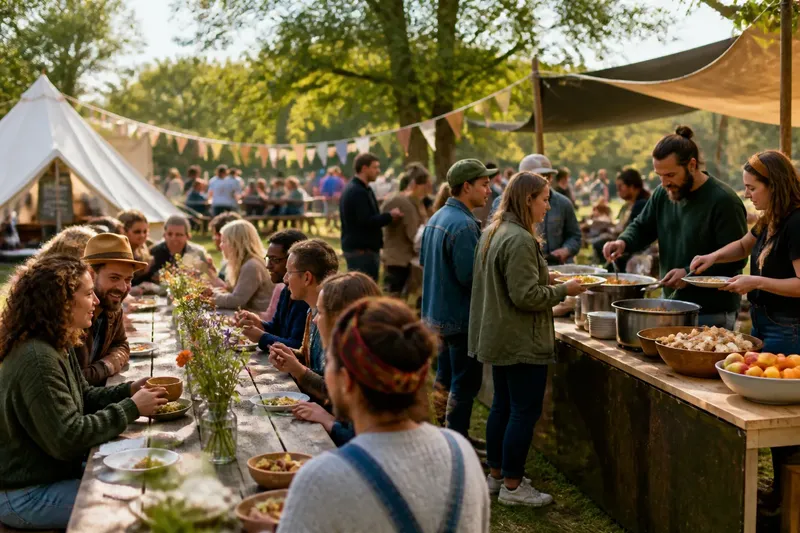
The most common mistake when choosing a festival food layout is treating it as decoration: a long table looks welcoming, so the host assumes it will work. But a table that crowds the path or leaves late arrivals standing can make a generous meal awkward; serving stations can solve that problem, though they may scatter the gathering. The choice is less about which arrangement looks festive and more about how people will meet, move and eat.
What changes when food is set out?
A communal table puts eating and conversation in the same place. Guests settle beside one another, pass bowls and notice who is still looking for a seat. That shared focus can make a meal feel like the centre of the gathering, particularly when everyone is eating at roughly the same time.
Serving stations separate the food from the place to sit. Guests collect a plate, choose from a spread and find a seat or a standing spot elsewhere. This makes arrival less dependent on a single seating moment, and can suit a festival where people come and go between performances, workshops or family commitments.
Neither format automatically creates a welcoming atmosphere. A long table can feel closed to someone who arrives late, while stations can turn a shared meal into a series of small, disconnected visits. Consider the social shape you want, then check whether the site and menu can support it.
Why does a long table create a bottleneck?
The problem often begins with a narrow approach. If guests must queue at one end, pass through a tight gap between benches, or reach across seated diners to take food, the table becomes a route as well as a dining place. Those competing uses slow movement and make conversation harder.
Check the whole path from arrival to seat: where plates are collected, where serving dishes sit, and how someone leaves the table without asking a row of people to move. Keep the main route clear, and avoid placing the food where it blocks an entrance, doorway or busy walkway. A separate collection point can preserve the table’s communal feel without making the table itself carry every task.
Another cause is treating one long surface as a single conversation. People at opposite ends may be too far apart to speak comfortably, and a guest who arrives alone may not know where to join. Break the visual length with shared serving bowls or smaller seating clusters, or use a shorter table arrangement that still lets people pass food nearby.
What makes serving stations feel disconnected?
Stations can solve crowding at the table but create a new problem if food, seating and company are too far apart. Guests may eat while standing beside the dishes, then disperse to find somewhere to sit. The meal becomes functional, yet the gathering loses a natural place to linger.
Bring the eating area within easy sight of the food, without placing chairs in the serving queue. A few small tables, benches or clear standing spaces can give people places to pause. If the festival already has a central meeting point, position seating so guests can see it and one another rather than facing a wall or a service area.
Stations also feel disjointed when every dish is placed on a separate surface. Guests must make several trips, and someone carrying a plate may have to navigate back through others. Group foods into a clear sequence—plates and cutlery first, main dishes together, then drinks and extras—while leaving enough room for people to approach and leave without crossing against the flow.
How do queues and menu choices affect the decision?
A long table works best when guests can sit and serve themselves without everyone arriving at one pinch point. If the meal is a shared spread of bowls, bread and dishes that travel easily, the table can keep the food in view and encourage people to pass things along. It is less suitable when the menu requires frequent replenishment or when serving equipment needs a separate working area.
Stations are often easier to adapt to menus with several distinct options, such as a hot dish, a plant-based choice and accompaniments. They also let guests take food at different times. The trade-off is that each station needs a clear approach, and a popular dish can still draw a queue even when the rest of the food is easy to reach.
Think through the menu as a guest would: can a person hold a plate while choosing, see what is available, and move away without reversing into the next person? Keep serving utensils with their dishes and make options legible with simple cards. For allergy or dietary information, use reliable details from the food provider rather than guessing from appearance.
How can festival food layouts include more guests?
Access is not an extra to consider after the layout is fixed. A crowded table may be difficult to approach for someone using a mobility aid, while a station can be hard to use if dishes are beyond reach or the queue has no space to turn. Think about clear routes, varied seating and the height and placement of serving items before choosing the format.
Offer more than one kind of place to eat where the site allows: a seat with a back, a stable surface for a plate and a place to stand can meet different needs. Keep a route open between food, seating and the rest of the gathering. If guests need to ask for help with every dish, the arrangement may be creating an avoidable barrier.
Imagine a small neighbourhood festival where families arrive at different times and the menu includes a shared stew, bread and a separate fruit table. The host could set the stew and bread at two serving points beside a few benches, then place fruit nearby but outside the queue; the expected result is that late arrivals can eat without disrupting those already seated, while the benches still offer a place to talk. If the gathering instead has a fixed communal meal, a long table with a clear approach and food passed along may better support the shared moment.
Which festival food format fits your gathering?
Is a long table better for conversation?
It can make conversation easier because guests sit together and share the same spread. It works best when people are likely to eat at a similar time and the table does not obstruct movement.
Are serving stations better for guests who arrive late?
Often, because guests can collect food without waiting for one seating moment. Keep seating close enough that people do not have to carry plates through a separate crowd.
Can a festival combine a table and serving stations?
Yes: use a communal table for seating and conversation, with food collected from a nearby station. This can retain a shared dining area while easing pressure on the table itself.
How should I decide if space is limited?
Trace the route guests will take from entry to food, seating and exit, then identify where people might meet head-on. Choose the arrangement that keeps that route clearest, even if it means a smaller table or fewer serving points.
What should you settle before setting out the food?
Walk the site at the height of the event, when other activities and foot traffic are present if possible. Mark the intended food, seating and queue areas with temporary signs or chairs, then look for crossed paths, blocked views and places where a person could be left without a comfortable spot.
Also decide who will replenish dishes, remove used plates and answer questions about ingredients. A long table may need someone to keep shared bowls supplied; stations may need someone to watch separate points. Assigning those roles makes the layout easier to maintain without turning every guest into a helper.
For a festival food gathering, the best choice is the one that lets people reach a meal without losing their place in the event. Choose a long table when eating together is the main occasion and the space can hold it comfortably; choose stations when timing, menu variety or circulation calls for people to serve themselves in stages. A simple, visible route between food and company matters more than matching every table to the same style.